
Alpha and Omega
First and last Greek letters, a title for Christ or God.

Gre regiment · CC BY-SA 4.0
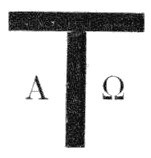
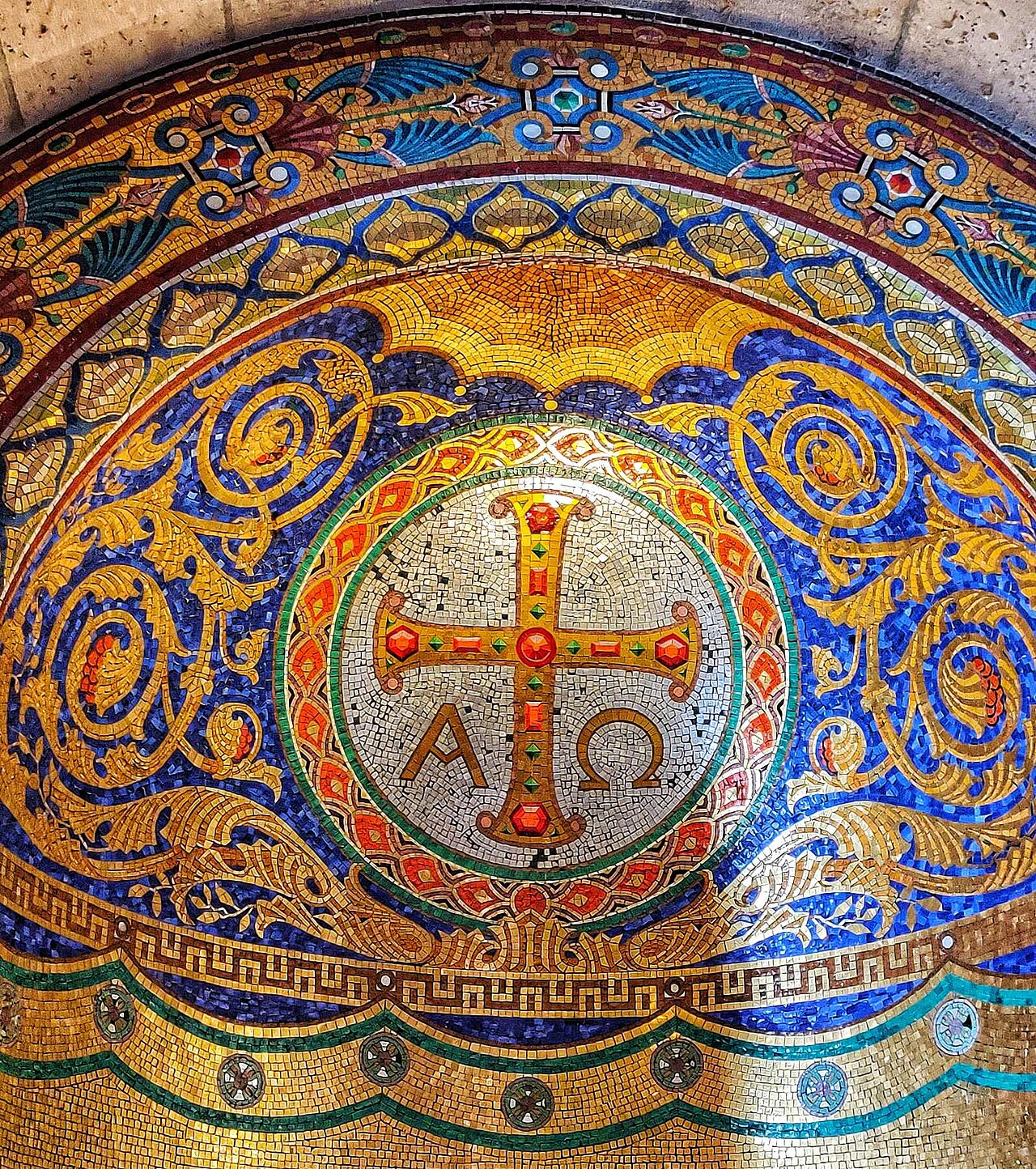
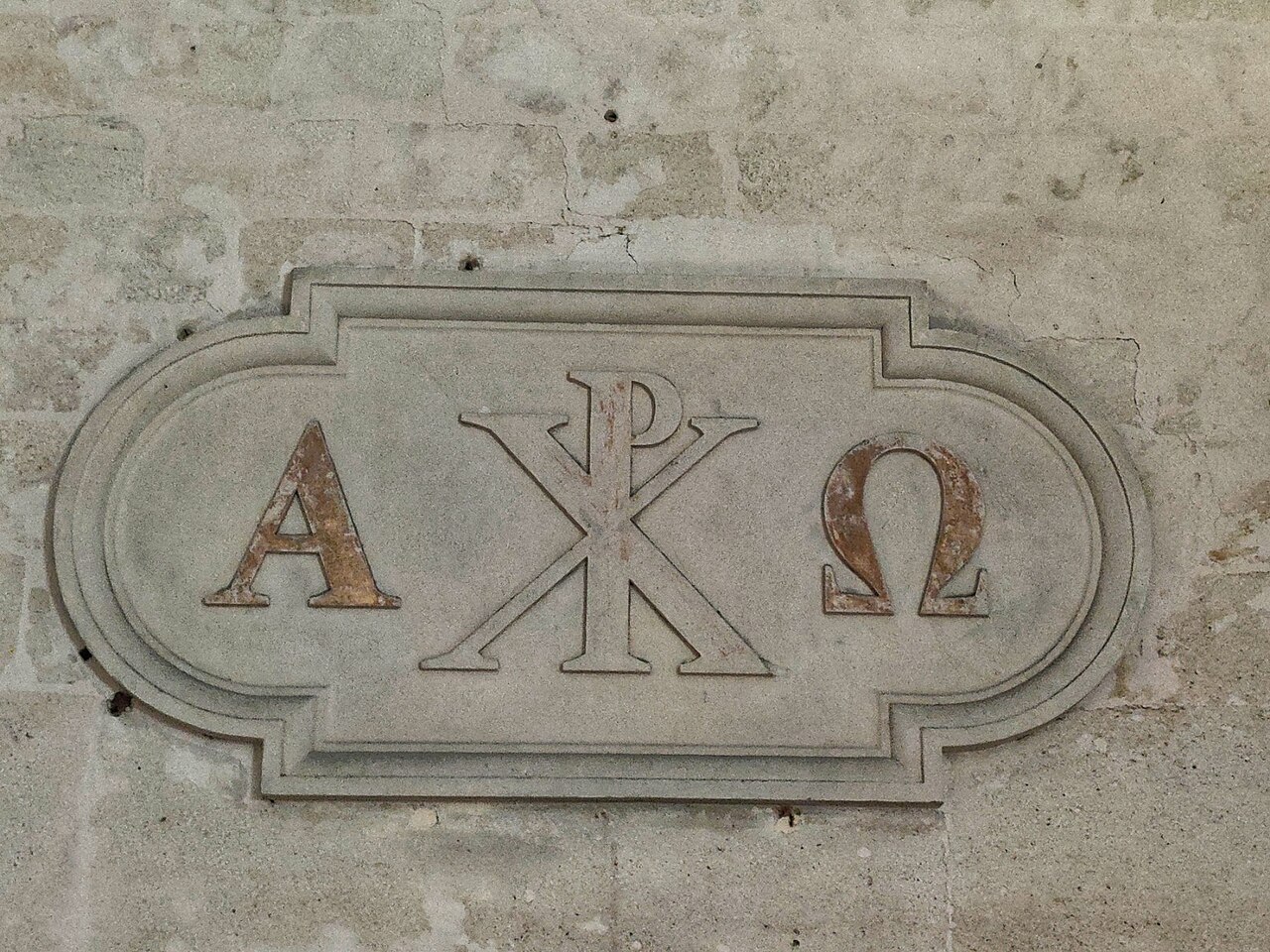
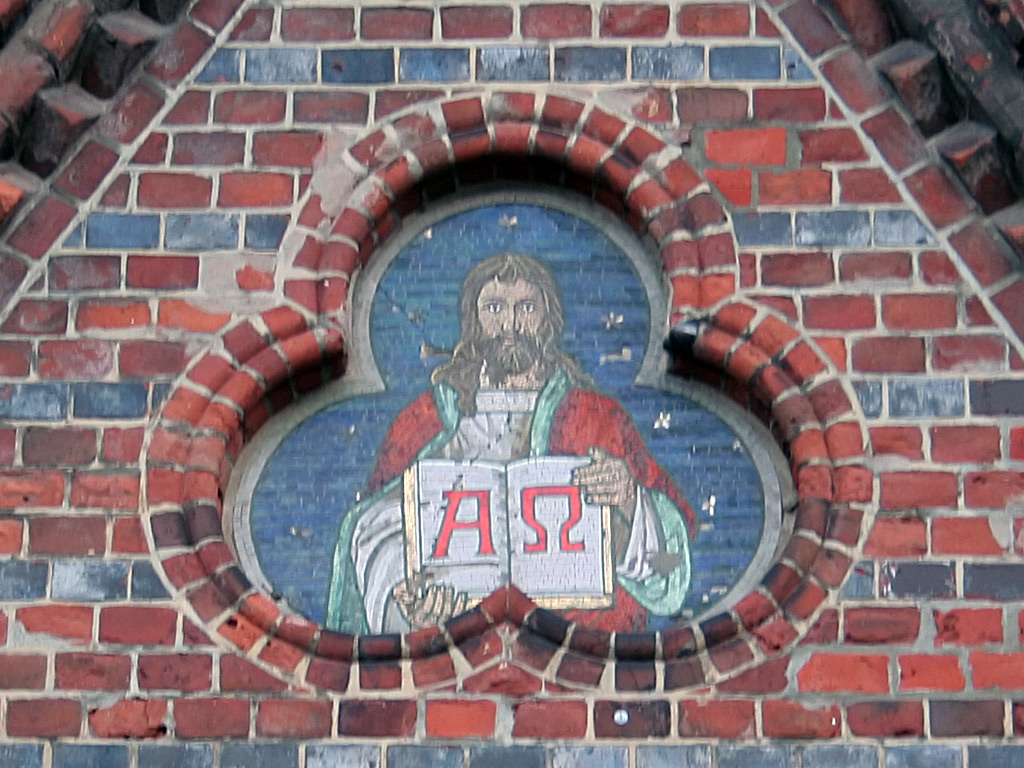
Alpha (Α, α) and Omega (Ω, ω) are the first and last letters of the classical (Ionic) Greek alphabet. In Christian tradition, they are used as a title of Christ or God in the Book of Revelation, where the phrase 'I am the Alpha and the Omega' appears. The pair is often combined with the Cross, Chi Rho, or other Christian symbols and serves as a visual emblem in Christian art.
- field
- Christian symbolism, biblical studies
- known_for
- Title of Christ or God in the Book of Revelation; Christian visual symbol
- first_recorded
- Some old manuscripts of the Christian New Testament
- scripture_references
- Revelation 1:8, 21:6, 22:13
Lore & Background
The first written record of the phrase 'alpha and omega' is from some old manuscripts of the Christian New Testament. The phrase 'I am the Alpha and the Omega' (Koiné Greek: ἐγώ εἰμί τὸ Ἄλφα καὶ τὸ Ὦ) is an appellation of Jesus and of the Father in the Book of Revelation, appearing in verses 1:8, 21:6, and 22:13. The first part of this phrase is first found in chapter 1 verse 8 and is present in every manuscript of Revelation that has 1:8. Several later manuscripts repeat the phrase in 1:11 as well, but most of the oldest manuscripts—including the Alexandrine, Sinaitic, and Codex Ephraemi Rescriptus—omit it, leading some modern translations to exclude it. Scholar Robert Young noted that the oldest manuscripts omit it. A similar reference is found in Isaiah 44, where God is said to be the first and the last. Elsewhere in the New Testament, the phrase 'I am' is used several times by Jesus, particularly in the Gospel of John. The phrase is interpreted by many Christians to mean that Jesus has existed for all totality and eternity or that God is eternal. Many commentators and dictionaries ascribe the title to both God and to Christ. Most Christian denominations teach that the title applies to God (Jesus Christ, the Father and the Holy Spirit). The letters Alpha and Omega, in juxtaposition, are often used as a Christian visual symbol. They were used in early Christianity and appear in the Roman catacombs. The letters were shown hanging from the arms of the cross in Early Christian art, and some cruces gemmatae (jeweled crosses in precious metal) have formed letters hanging in this way, called pendilia—for example, in the Asturian coat of arms, which is based upon the Asturian Victory Cross. Despite always being in Greek, the letters became more common in Western than Eastern Orthodox Christian art. They are often shown to the left and right of Christ's head, sometimes within his halo, where they take the place of the Christogram used in Orthodox art.
Reader's Guide
The Alpha and Omega symbol holds enduring significance in Christianity as a visual and textual representation of divine eternity and totality. Derived from the first and last letters of the Greek alphabet, the phrase 'I am the Alpha and the Omega' appears in the Book of Revelation, attributed to both Jesus and God the Father. This dual attribution reflects a theological ambiguity noted by scholars such as Barnes, who observed that the writer may not have intended to refer specifically to Jesus. The symbol's use in early Christian art, including Roman catacombs and jeweled crosses, demonstrates its deep historical roots. Its presence in Western Christian art, often flanking Christ's head or within his halo, contrasts with Eastern Orthodox traditions that favor the Christogram. The symbol's legacy extends beyond Christianity: in Judaism, the Hebrew word emet ('truth') is composed of the first, middle, and last letters of the Hebrew alphabet, and in Islam, God is called al-ʾAwwal ('The First') and al-ʾĀkhir ('The Last') in the Qur'an. Thus, the Alpha and Omega serves as a cross-cultural emblem of divine primacy and finality, while remaining a distinctively Christian identifier.
Did You Know?
- The phrase 'I am the Alpha and the Omega' appears in Revelation 1:8, 21:6, and 22:13.
- Several later manuscripts repeat the phrase in Revelation 1:11, but most oldest manuscripts omit it.
- The letters Alpha and Omega appear in the Roman catacombs and were used in early Christian art.
- In Hebrew, the word emet (truth) is composed of the first, middle, and last letters of the Hebrew alphabet.
Academic Formation and Theological Convictions
James R. White built his scholarly foundation across several institutions before establishing himself as a prominent voice in Reformed Baptist circles. He earned a bachelor's degree from Grand Canyon University in Arizona, followed by a master's in divinity from Fuller Theological Seminary. He subsequently pursued three additional graduate-level credentials—a Th.M., a Th.D., and a D.Min.—through Columbia Evangelical Seminary, an online institution that lacks formal accreditation. This gap in institutional recognition has drawn scrutiny from several of his debate opponents, who have raised pointed questions about the standing of his academic résumé. Despite these challenges, White has remained firmly rooted in the Reformed Baptist tradition and Calvinist theology. He is a vocal advocate for Creationism and Theonomy, positions that shape both his public debates and his written scholarship. His theological commitments run deep enough that he has dedicated entire books to defending Reformation-era doctrines against what he perceives as modern dilutions of historic Christian belief.
The Debate Circuit
Few Christian apologists have logged as many public appearances as James White. By his own account, he crossed the two-hundred-debate threshold in 2025 when he faced Dale Tuggy, a milestone capping a career that had already spanned more than 170 moderated public encounters. His opponents have ranged widely across the theological and academic spectrum: New Testament scholars Bart Ehrman, John Dominic Crossan, and Marcus Borg; atheist polemicist Dan Barker; Catholic apologist Jimmy Akin; a representative of Iglesia ni Cristo named Joe Ventilacion; and figures from the King James Only movement, Jehovah's Witnesses, and the broader atheist community. The subjects he tackles in the debate arena include Calvinism, Catholic doctrine, Islam, Mormonism, infant baptism, and the reliability of modern Bible translations. One of his most consistent public positions has been a sharp critique of the King James Only movement, which he argues rests on the false premise that the 1611 translation is without error. He has maintained that the KJV contains multiple translation mistakes, a stance that has placed him at odds with some fundamentalist circles that champion that single version.
Pastoral Service and Ministry Leadership
White's ministerial career in the Phoenix, Arizona area stretches back nearly three decades. For two full decades, from 1998 through 2018, he held the elder role at Phoenix Reformed Baptist Church, a position that anchored his local congregational life. In 2018 he transitioned to Apologia Church in nearby Tempe, initially taking on the title of Scholar-in-Residence before being formally installed as one of the church's pastor-elders the following year. Beyond local pulpit ministry, he directs Alpha and Omega Ministries, a Christian apologetics organization headquartered in Phoenix. In that capacity he produces and hosts the Dividing Line Podcast and radio program, both distributed through the organization's YouTube channel. His influence also extends into Bible translation work: he served as a critical consultant for the Lockman Foundation's New American Standard Bible, lending his textual expertise to one of the most widely used English translations in evangelical circles. On a more personal note, White maintains a close friendship with Skillet frontman John Cooper and his wife Korey, offering them theological counsel in his capacity as a friend and advisor.
Prolific Authorship and Family Life
White's written output spans nearly three decades, with titles appearing as early as 1990 and continuing through 2019. His bibliography reflects a broad apologetic agenda: he has taken on Mormonism in works like Letters to a Mormon Elder and Is the Mormon My Brother?, challenged Catholic Mariology in Mary: Another Redeemer? and The Fatal Flaw, and addressed the King James Only controversy in a dedicated 1995 volume. Other books tackle justification, same-sex relations, the doctrine of the Trinity, and the Qur'an, published through houses including Bethany House, Calvary Press, and Multnomah. A 2004 co-authored volume with Dave Hunt, Debating Calvinism: Five Points, Two Views, captures his commitment to the five-point Calvinist framework. Outside the public sphere, White is married with two children and five living grandchildren. His family life, however, carries a noted strain: he has been estranged from his elder sister, Patty Bonds, for many years—a personal rift that stands in quiet contrast to the decades of public engagement that define his professional identity.
Gallery


Frequently Asked Questions
What is Alpha and Omega in Christian theology?
Alpha and Omega is a title applied to Christ or God, drawn from the first and last letters of the classical Greek alphabet. It conveys the idea of an eternal being with no beginning and no end.
Where does the phrase 'Alpha and Omega' appear in Scripture?
It occurs three times in the Book of Revelation—at 1:8, 21:6, and 22:13—where the divine speaker declares 'I am the Alpha and the Omega.' These passages are among the earliest attested in surviving New Testament manuscripts.
How is Alpha and Omega used in Christian art and iconography?
The two Greek letters are frequently rendered alongside the Cross, the Chi Rho monogram, or other sacred symbols. Together they form a compact visual shorthand for the eternal, all-encompassing nature of God.
Why is the Alpha and Omega title theologically significant?
It anchors Christ's (or God's) identity as the source and consummation of all things, existing outside of time. For believers, it reinforces the doctrine of divine eternity and sovereignty over history.
What is the historical origin of the Alpha and Omega symbol?
The title traces back to the earliest Greek-language manuscripts of the New Testament's Book of Revelation. Over centuries it evolved from a scriptural declaration into a widely recognized emblem in Christian visual culture.
More in Christian Theology 1-24
Elsewhere in the Christian Theology universe
Spotted an error? Know more?
This is a living reference — every entry is fact-audited, and reader corrections feed straight into our audit queue. Suggest an edit · See this site's audit record