
Afterlife
Speculation on existence after death across religions and philosophies.

Dio2nd · CC BY-SA 4.0
The afterlife is a speculation concerning existence after death, in which the essential part of an individual's stream of consciousness or identity continues to exist after the death of their physical body. Major views on the afterlife derive from religion, esotericism, and metaphysics, with belief systems ranging from supernatural realms to reincarnation.
- field
- Religion, esotericism, metaphysics
- known_for
- Speculation on continued existence after death; concepts of reincarnation, heaven, hell, and otherworlds
Lore & Background
The afterlife is a concept found in many ancient and modern belief systems. In some views, the surviving essential aspect—such as the soul or spirit—continues in a supernatural realm, while in others, the individual may be reborn into this world through reincarnation, often with no memory of past lives. Major Indian religions, including Buddhism, Hinduism, Jainism, and Sikhism, each have their own interpretations of reincarnation, which is part of the Saṃsāra/karma doctrine of cyclic existence.
Reader's Guide
The afterlife has been a central concern in human history, shaping funeral practices, moral codes, and theological systems. In Ancient Egyptian religion, the afterlife was a driving force behind mummification, tomb construction, and the use of texts like the Book of the Dead to guide the deceased through challenges. Beliefs about heaven and hell vary widely: some traditions depict heaven as a paradise or higher place, while hell is a place of punishment or an abode of the dead. Reincarnation appears in diverse cultures, from ancient Greek figures like Pythagoras and Plato to tribal societies in Australia, East Asia, Siberia, and South America. The concept remains a subject of scholarly research, with historical relations between sects such as the Cathars, Druze, and Rosicrucians and earlier traditions like Neoplatonism and Gnosticism.
Did You Know?
- In Ancient Egyptian belief, the heart was weighed against the Shu feather of truth; if heavier, the demon Ammit devoured the deceased.
- Reincarnation is found in many diverse ancient cultures, including historic Greek figures such as Pythagoras and Plato.
- Some belief systems, such as many pagan ones, hold that the dead go to a specific place like paradise or the underworld based on their actions and beliefs.
- Rosicrucians speak of a life review period occurring immediately after death and before entering the afterlife's planes of existence.
The Core Question of Continuity
The afterlife represents humanity's oldest speculation about what happens when the body dies. At its heart, the concept proposes that something essential—whether a partial element, a full soul, or a spirit carrying personal identity—persists beyond physical death. This surviving aspect is the thread connecting one's sense of self to whatever comes next. Belief systems diverge sharply on where and how that continuation unfolds. Some traditions place the departed in a supernatural realm, a separate plane of existence. Others envision a return to this very world through rebirth, where the individual begins the cycle anew, typically without recollection of prior deeds. Major frameworks for thinking about this question draw from religion, esotericism, and metaphysics, each offering its own architecture for what death means and what, if anything, survives it.
The Cycle of Rebirth
Reincarnation—also called rebirth or transmigration—posits that some aspect of a living being enters a new physical body after death, restarting the life cycle. This idea sits at the center of the Saṃsāra and karma doctrine, where souls pass through sequences of human and animal forms. In traditional Hindu teaching, each incarnation serves as a lesson, gradually purifying the soul until it achieves liberation. Buddhism, Jainism, and Sikhism each offer their own interpretations of this cyclic process. The concept is not confined to South Asia; ancient Greek thinkers like Pythagoras and Plato embraced a form of metempsychosis, and tribal societies across Australia, East Asia, Siberia, and South America hold similar beliefs. Even within Abrahamic traditions, groups such as Kabbalists, the Druze, the Cathars, Alawites, and Rosicrucians reference reincarnation, linking their ideas to Neoplatonism, Orphism, Gnosticism, and other Roman-era philosophies. Rosicrucians specifically describe a post-death life review before the silver cord is severed, followed by a final judgment akin to an end-of-life report.
Heaven, Hell, and the Architecture of the Beyond
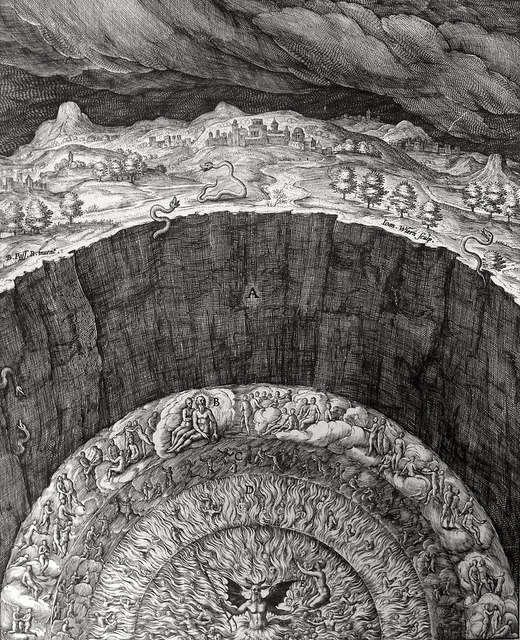
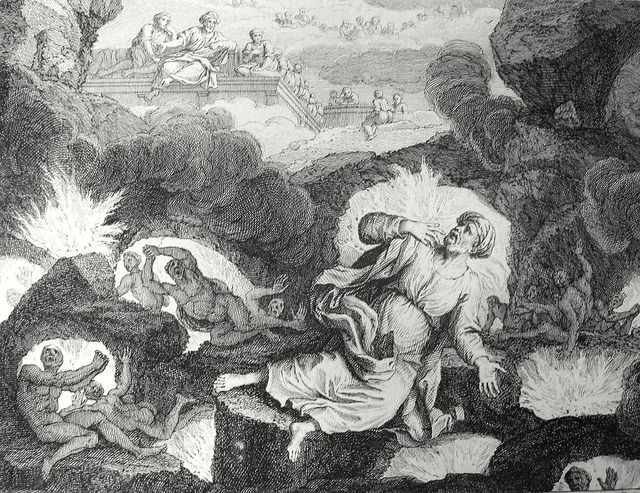
The afterlife is often mapped as a spatial or hierarchical landscape. Heaven appears under countless names—Jannah, Valhalla, Svarga loka, the Seven Heavens, the Summerland, Tian—described as a higher, holiest place where gods, angels, saints, or ancestors reside. In Hinduism, the soul may enter one of seven positive or seven negative regions after death, then face rebirth according to karma until it attains Moksha or Nirvana. Hell, by contrast, functions as a place or state of punishment in traditions with a linear divine history, often depicted as eternal. In cyclic traditions, hell serves as an intermediary between incarnations rather than a final destination. Many traditions locate hell beneath the earth's surface or in another dimension, with entrances accessible from the living world. Some systems, however, treat the afterlife not as reward or punishment but as a neutral abode—the grave, Sheol, or Hades—simply where the dead reside.
Egypt's Earliest Blueprint
Ancient Egyptian religion offers one of the earliest documented afterlife belief systems in recorded history. When a person died, the Egyptians understood that components of the soul—specifically the ka, a body double, and the ba, the personality—departed for what they called the Kingdom of the Dead. The living had a continuing obligation: they provided offerings of food and drink to sustain the ka, believing these nourished its spiritual needs in the afterlife. The ka would eventually reunite with the deceased's spirit, and together they would enjoy eternal life. This framework reveals a practical, relational dimension to the afterlife concept—the dead were not simply gone but remained participants in a cosmic order, dependent on the actions of those still living. The Egyptian model also illustrates how early civilizations structured the afterlife as a specific place with its own rules, sustenance requirements, and ultimate purpose, setting a template that later religious and metaphysical traditions would elaborate in their own ways.
Gallery
Frequently Asked Questions
What is the Afterlife in Christian theology?
The Afterlife refers to the doctrine that a person's essential identity or soul persists beyond the death of the physical body. In Christian teaching, this continued existence is understood as a transition into a supernatural realm rather than a return to earthly life.
What are the main destinations in Christian afterlife belief?
Traditional Christian theology outlines several afterlife states, most notably Heaven (eternal communion with God), Hell (permanent separation from God), and, in Catholic and some Orthodox traditions, Purgatory as a transitional purification. Protestant denominations generally emphasize a binary outcome of Heaven or Hell without an intermediate state.
How does the Christian afterlife differ from reincarnation?
Christian doctrine holds that each person receives one earthly life followed by a single, definitive judgment and eternal destination. This stands in contrast to reincarnation, which posits repeated cycles of birth, death, and rebirth until spiritual liberation is achieved.
What role does the soul play in Christian afterlife teaching?
The soul is regarded as the immaterial, essential part of a person that carries individual consciousness and moral identity beyond bodily death. Christian theology teaches that this soul is what stands before God at the final judgment and enters its eternal state.
Why is the Afterlife concept central to Christian theology?
The afterlife doctrine gives ultimate purpose and moral weight to a person's earthly choices, framing salvation and judgment as the final resolution of human existence. It also underpins core Christian practices such as prayer, sacraments, and ethical living, all of which are oriented toward one's eternal destiny.
More in Christian Theology 1-24
Elsewhere in the Christian Theology universe
Spotted an error? Know more?
This is a living reference — every entry is fact-audited, and reader corrections feed straight into our audit queue. Suggest an edit · See this site's audit record